
How Keyless Remote Entry Works
Ever walked up to your car, hit the button on the key fob, and the doors just click open? That’s keyless remote entry in action.
Radio Signals Between Key Fob and Car
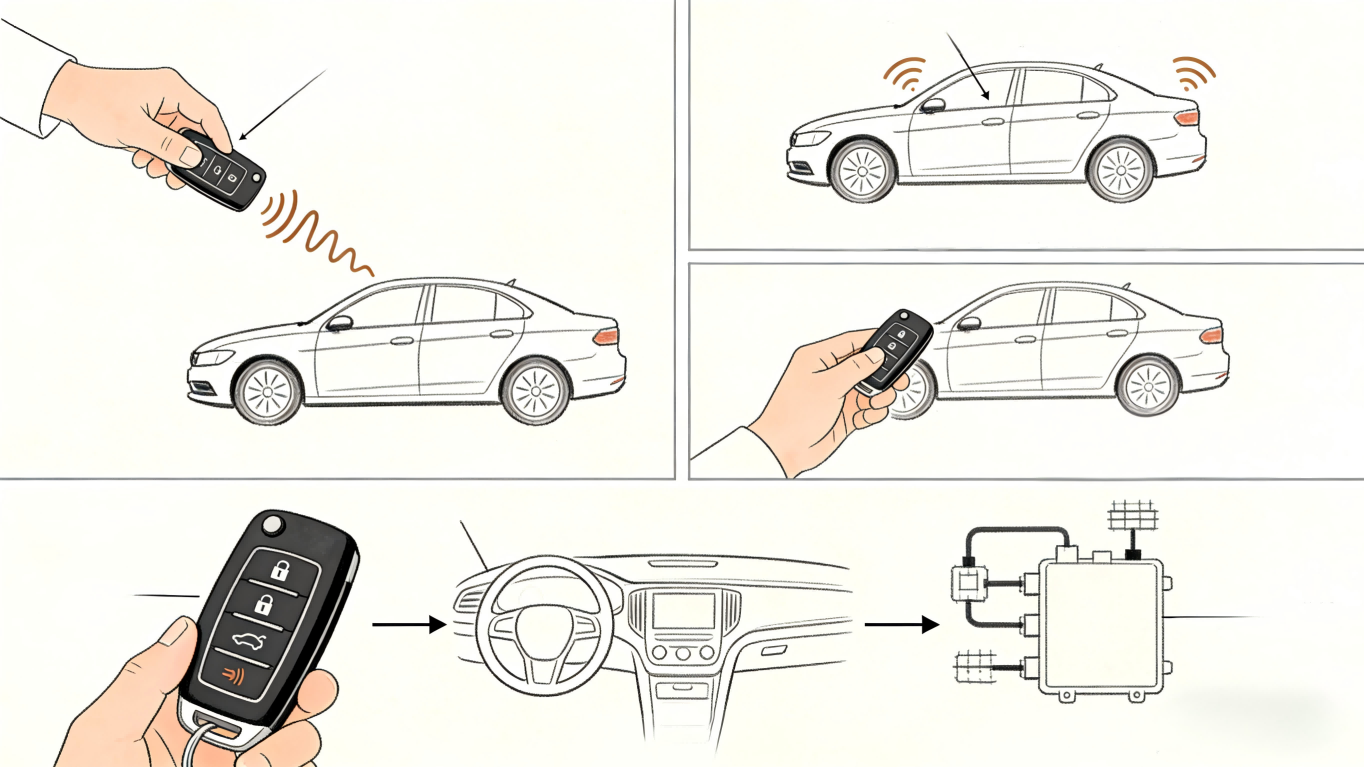
A remote keyless entry system uses low-power radio frequency (RF) signals:
- Your key fob sends a coded RF signal when you press a button.
- The car’s remote control door lock receiver (keyless entry receiver) listens for that signal.
- If the code matches, the car’s central locking module triggers the locks, trunk, alarm, or remote start.
You don’t need to point the key fob like a TV remote; RF travels through most materials and doesn’t require perfect aim.
Main Components of Keyless Remote Entry
A typical car keyless entry setup includes:
- Key fob transmitter – The handheld remote with buttons for lock, unlock, trunk, and sometimes remote start.
- In-car receiver – Often built into a keyless entry and remote start module or body control module; this interprets the RF signal.
- Central locking module – Sends power to door lock actuators, trunk release, and sometimes the car alarm keyless entry system.
On some models (Ford, Toyota, Honda, BMW, Nissan, Hyundai, Jeep, etc.), the receiver may be integrated into a car alarm system with remote start and keyless entry.
Range, Line of Sight, and Interference
Most keyless remote entry systems work reliably within about 20–60 feet, but performance depends on:
- Range – Weak keyless entry remote battery = reduced range.
- Line of sight – Walls, metal structures, or being inside a building can block or weaken the signal.
- Interference – Other RF devices, crowded parking garages, and some security systems can cause remote keyless entry not working or working only sometimes.
If you suddenly have to stand closer to your car for the remote to work, battery or interference is usually the culprit.
Rolling Code Security and Encryption
To keep thieves from copying your signal, modern keyless remote entry systems use:
- Rolling code security – The code changes every time you press a button. The car and key fob stay in sync with a constantly evolving code list.
- Encryption – The signal is encoded so it can’t be easily read or cloned by basic RF tools.
This is why most replacement keyless remotes and key fob programming require proper syncing – the car must “learn” that fob’s rolling code sequence.
Typical Keyless Remote Entry Functions
On most vehicles in the US market, a keyless entry remote can handle:
- Lock / Unlock – All doors, sometimes driver’s door first, then all doors with a second press.
- Trunk / Hatch Release – Opens the trunk or liftgate from a distance.
- Panic Alarm – Sounds the horn and flashes the lights to draw attention or help locate the car.
- Remote start integration – On cars with keyless entry with remote start, a dedicated button or combo press will start the engine or activate climate control.
If you’re upgrading or replacing, I always recommend using trusted kits and remotes from brands like keylessbest or comparable OEM-level suppliers. They’re built to match factory specs, pair correctly with your existing remote keyless entry system, and avoid the security risks and glitches you often get with ultra-cheap, no-name remotes.
Keyless Remote Entry vs Passive Keyless Entry
What Is Remote Keyless Entry (RKE)?
Remote keyless entry (RKE) is what most people mean when they say “keyless remote entry.”
You press buttons on a key fob to:
- Lock / unlock the doors
- Pop the trunk
- Set off the panic alarm
- In some cars, trigger remote start with keyless entry
It works by sending a short-range radio signal from the key fob to the car’s receiver. No button press = no action.
What Is Passive / Proximity Keyless Entry?
Passive keyless entry (also called proximity keyless entry) goes a step further.
You keep the key fob in your pocket or bag and the car:
- Unlocks automatically when you touch the door handle
- Locks automatically when you walk away or touch the handle
- Often lets you start the engine with a push button while the fob is inside
The car constantly looks for the fob’s signal and reacts when it’s close enough.
Main Differences: Button Press vs Automatic Detection
- Remote keyless entry (RKE)
- You press a button on the keyless entry remote
- Works from a distance (parking lot, driveway)
- Feels more “manual,” but also more deliberate
- Passive keyless entry
- The car detects the fob automatically
- Unlocks when you grab the handle, start with a button
- Feels fully “hands-free” and high-end
Pros and Cons: Remote Keyless Entry
Pros:
- Simple, proven tech on most vehicles in the U.S.
- Lower cost to repair and replace
- Easy to find an OEM or aftermarket replacement keyless remote
- Less always-on communication between car and fob
Cons:
- You must press buttons every time
- Less “luxury” feel compared to proximity systems
- Range depends heavily on battery strength and interference
Pros and Cons: Passive Keyless Entry
Pros:
- True hands-free convenience
- Great when your hands are full (kids, groceries, work gear)
- Pairs well with push-button start and higher trim packages
- Feels more “premium,” which can help resale value
Cons:
- More complex and often more expensive to fix or replace
- Higher risk of relay attack style theft if you don’t store the fob smartly
- Replacement fobs and programming can be dealer-only on some brands like BMW
How To Tell Which Keyless System Your Car Has
Use this quick check:
- If you must press buttons on the key fob to unlock or lock:
→ You have remote keyless entry (RKE) - If the car unlocks when you touch the handle while the fob stays in your pocket, and you have push-button start:
→ You have passive / proximity keyless entry
If you’re shopping for a replacement keyless entry remote or upgrading, match what your vehicle actually uses. For newer GM models, for example, you’ll want a compatible OEM-style key fob like this Chevrolet key fob for keyless entry systems rather than a generic remote that won’t program correctly.
Benefits of Keyless Remote Entry Systems
Everyday Convenience
With a keyless remote entry system, daily use is faster and easier:
- Lock/unlock doors with a single button press
- Find your car quickly in busy parking lots using the panic button
- Pop the trunk while your hands are full (groceries, luggage, kids’ gear)
- Share the vehicle easily within the family—no need to pass around a metal key
| Task | With Keyless Remote Entry | Without Keyless Remote Entry |
|---|---|---|
| Locking at night | One button from the door | Walk to each door, lock manual |
| Unlocking in the rain | Press as you approach | Fumble with key in the door |
| Loading groceries | Remote trunk release | Put bags down, unlock manually |
Safety and Security Advantages
Keyless remote entry isn’t just about convenience—it also boosts safety:
- Lock from a distance when you forget on the way into the house
- Panic alarm helps draw attention in suspicious situations
- No lock turning in the door, which makes forced entry harder on many cars
- Many systems tie into the car alarm keyless entry system for better protection
Added Comfort Features (Remote Start & Trunk)
When paired with remote start with keyless entry, comfort goes up a level:
- Warm up the car in winter or cool it down in summer before you get in
- Unlock and open the trunk for deliveries or curbside pickup without leaving the driver’s seat
- Integrate with remote start and keyless entry kits for smoother everyday use
If you’re driving something like a newer Ford Mustang, a modern OEM-style key fob such as this 2026–2026 Ford Mustang keyless entry remote gives you that full comfort bundle in one unit.
How Keyless Entry Boosts Vehicle Value
A solid remote keyless entry system makes your vehicle more attractive in the U.S. market:
- Higher resale appeal—buyers expect keyless entry on most late-model vehicles
- Better perceived safety and technology compared with basic key-only cars
- Easier to sell or trade in because it matches modern convenience standards
For older vehicles that didn’t come with it, adding an aftermarket keyless entry kit is a low-cost upgrade that instantly improves the user experience and overall vehicle value.
Common Keyless Remote Entry Problems
When your keyless remote entry stops working, it’s almost always one of a few common issues. Knowing these saves you time and money.
Remote keyless entry not working: main causes
Most “remote keyless entry not working” problems come down to:
- Weak or dead keyless entry remote battery
- The most common issue by far.
- Signs: reduced range, you need to press buttons multiple times, or the key fob works only sometimes.
- Fix: replace the keyless entry remote battery with the correct type (often a CR2032 or CR2026 coin cell). If you drive a popular model like a Honda or BMW, you can usually match your remote style to guides or replacement fobs (for example, modern BMW remote keyless entry remotes use specific battery types and cases).
- Signal interference from other devices or environments
- Nearby Wi‑Fi routers, other car alarms, remote start systems, or even big metal structures and parking garages can block or weaken the RF signal.
- If the fob works fine away from a specific location (like your office garage), interference is likely the problem.
- Desynchronization between key fob and vehicle
- Sometimes the fob and the vehicle’s receiver lose sync, especially after a battery change, jump start, or low car battery.
- Symptoms: new battery installed, no damage, light on the fob works—but the car doesn’t respond.
- Fix: perform a key fob reprogram or resync procedure; some brands let you do this at home, while others need dealer or locksmith tools.
- Physical damage, water damage, and worn buttons
- Drops, being stepped on, or going through the wash can crack solder joints or fry the circuit board.
- Rubber buttons wear out over time, causing “dead spots” where you have to press very hard or at a specific angle.
- In these cases, you usually need a replacement keyless entry remote or at least a new case and keypad. For higher-end models (like certain Mercedes or Nissan SUVs), I always recommend sticking with trusted sources that sell OEM‑grade keyless remotes, such as premium replacement keyless entry fobs for Nissan/Infiniti SUVs.
If your keyless remote entry system suddenly fails, start by checking the battery, trying the remote away from obvious interference, and inspecting the fob for cracks or water signs. Those three checks solve most everyday keyless entry headaches.
Quick Fixes and Basic Troubleshooting for Keyless Remote Entry
Simple checks before replacing parts
Before you buy a new keyless entry fob or call a dealer, run through these quick checks:
- Try your spare key fob. If the spare works, the issue is with the first remote, not the car.
- Check your car battery. Weak car batteries can make the remote keyless entry system act dead.
- Test from different spots. Stand closer to the vehicle and point the key fob at the driver’s door or windshield.
- Look for obvious damage. Cracked housing, rattling parts inside, or worn buttons usually mean the keyless entry remote needs repair or replacement.
Step‑by‑step keyless entry remote battery replacement
Most remote keyless entry problems in the U.S. are just a dead or weak keyless entry remote battery. Here’s the simple process most key fobs follow:
- Identify the battery type
- Most car keyless entry remotes use a 3V coin battery like a CR2032.
- Check the tiny markings on the old battery, or your owner’s manual, before you buy. This guide on why the CR2032 powers most key fob batteries is a good quick reference if you’re unsure: CR2032 key fob battery info.
- Open the key fob case
- Look for a small notch or seam around the edge.
- Use a small flat screwdriver or a plastic pry tool and twist gently.
- Don’t force it—too much pressure can crack the case or damage the keyless entry remote circuit board.
- Swap the battery
- Note which side of the battery faces up (+ side).
- Remove the old battery and insert the new one in the same orientation.
- Make sure it sits flat and snug.
- Close and test
- Snap the case back together firmly.
- Stand near your vehicle and test lock, unlock, and panic buttons.
If your Honda or Hyundai keyless entry remote still acts weak right after a fresh battery, you may be dealing with a programming or internal issue, not just the battery.
How to resync or reinitialize a keyless remote
Sometimes the keyless remote entry system loses sync with the car after a battery change or low voltage event. A basic resync often fixes this:
Common resync method (generic):
- Sit in the driver’s seat with all doors closed.
- Insert the physical key in the ignition (or keep the fob in the car for push‑button models).
- Turn the key to the ON position (don’t start the engine), then back to OFF, 3–5 times within about 10 seconds.
- On the last cycle, leave it in ON, then press LOCK on the key fob for a few seconds.
- Turn ignition OFF and test the remote.
Not all vehicles use the same process, but this simple sequence works on many Ford, Nissan, and older Toyota keyless entry systems. If your vehicle has a specific procedure in the owner’s manual, follow that first.
When DIY troubleshooting is enough
You can usually handle things yourself when:
- The remote keyless entry not working issue started right after the battery died.
- Only one keyless entry fob is failing, and the spare works fine.
- The buttons feel normal and the case isn’t cracked or soaked.
- You have clear, simple instructions to program a keyless entry remote for your specific make (Ford, Honda, Toyota, Nissan, etc.).
In these cases, a battery swap, basic resync, or quick key fob programming guide is usually all you need.
When to call a locksmith, dealer, or specialist
Step away from DIY and call a pro when:
- Both keyless remotes stop working at the same time.
- The car won’t respond at all, even after a known‑good battery and resync attempt.
- There’s water damage, heavy impact, or the remote won’t open without breaking.
- Your vehicle uses a smart key / proximity key / BMW or newer European keyless entry system that requires dealer‑level tools.
- You’ve tried programming multiple times and the remote still won’t pair.
In those cases, a mobile locksmith, dealer, or keyless entry specialist can test the remote, check for receiver issues, and handle advanced key fob programming or full keyless entry fob replacement safely.
Programming and Reprogramming a Keyless Remote
When Keyless Remote Programming Is Needed
You’ll usually need to program or reprogram a keyless entry remote when:
- You buy a replacement keyless remote or key fob (OEM or aftermarket).
- The remote keyless entry system loses sync after a battery change or low battery.
- A used car came with no working keyless entry fob.
- You want to add an extra fob for another driver in your household.
If your remote keyless entry is not working even after a new battery, programming or resync is the next step.
Basic DIY Keyless Remote Programming Steps
Many U.S. vehicles let you do DIY key fob programming with just the car and the remote. Every brand is different, but most follow the same idea:
- Sit in the driver’s seat with all doors closed.
- Insert the key and turn it from OFF to ON several times (often 3–8) within a few seconds.
- Stop in the ON or ACC position until you see door locks cycle or hear a chime (programming mode).
- Press a button on each keyless entry remote you want to program.
- Wait for locks to cycle again, then turn the key off and test each fob.
Always follow the exact steps in your owner’s manual or from the remote supplier. For example, if you’re adding a replacement for a Toyota keyless entry remote, you’ll want a fob that’s already matched to your vehicle, like this compatible Toyota Camry / Corolla keyless entry remote.
Brand Examples: Ford, Honda, Toyota, Nissan, BMW
- Ford remote keyless entry – Many older F-150, Explorer, Expedition and similar models support in-car DIY programming with ignition cycles and lock/unlock steps. Newer Fords and push-button start models often need a programmer or dealer.
- Honda keyless entry remote – Some older Civics/Accords allow DIY via a sequence of ignition ON/OFF and door lock cycles. Newer smart keys usually require a scan tool.
- Toyota keyless entry – Certain older Toyota and Scion models support a “lock/unlock + key turn” sequence. Late-model smart keys will be dealer/locksmith only.
- Nissan keyless entry – Older models may allow DIY, but most Intelligent Key systems need special equipment.
- BMW remote keyless entry – Most BMW fobs, especially comfort access and push-button start, must be programmed via dealer-level software; DIY is usually not an option.
If you’re getting a Ford keyless entry remote for a newer SUV or truck, make sure it’s ready for professional programming, like this OE-style Ford Expedition key fob for keyless entry.
DIY vs Dealer-Only Programming
DIY Programming Works When:
- The vehicle supports in-car programming (usually listed in the manual).
- You’re using a compatible keyless entry remote with the right FCC ID and part number.
Dealer/Locksmith Only Programming Is Required When:
- The car uses a proximity key / passive keyless entry or push-button start.
- The vehicle’s immobilizer and rolling code security need special software.
- You’ve lost all keys and need a full system reset.
High-end brands and newer models lock down their remote keyless entry system so only a dealer or qualified locksmith can access it.
Dealer, Locksmith, and Specialist Options
If DIY doesn’t work or your vehicle doesn’t support it, you have three main options:
- Dealer
- Best for newer vehicles still under warranty.
- Access to full factory software and updates.
- Usually the most expensive route.
- Automotive Locksmith
- Mobile service that can come to your home or work.
- Typically cheaper than the dealer.
- Can program keyless entry remotes, cut keys, and handle lost-all-key situations.
- Keyless/Car Electronics Specialist
- Good for aftermarket keyless entry kits and remote start with keyless entry systems.
- Can help when you’ve upgraded from manual locks or added a car alarm.
Tips to Avoid Programming Mistakes
Before you program a keyless entry remote or car key fob, keep these points in mind:
- Match the specs
- Check year, make, model, and trim.
- Verify FCC ID, part number, and button layout.
- Use a strong battery
- Install a new replacement battery for the keyless entry remote first.
- Low voltage can cause failed programming.
- Follow all steps exactly
- Timing matters. If the instructions say 10 seconds, stay within that window.
- Program all fobs in the same session; some systems erase old ones if you don’t.
- Don’t mix procedures
- Use programming steps for your exact vehicle, not “close enough” instructions from another model or year.
- Test everything
- Check lock, unlock, trunk, and panic buttons.
- Make sure the car starts if the key includes an integrated transponder.
Done right, keyless remote programming is a one-time job that keeps your vehicle remote entry smooth, secure, and convenient.
Aftermarket and Replacement Keyless Remote Entry
When to Replace a Keyless Entry Fob
You should replace your keyless entry remote when:
- Buttons stop responding or work only sometimes
- Keyless entry remote battery dies frequently
- The case is cracked, worn, or water-damaged
- You lose a fob and want a spare keyless entry remote for backup
OEM vs Aftermarket Keyless Remotes
Both can work great if you buy from a solid source:
| Type | What It Is | Pros | Cons |
|---|---|---|---|
| OEM keyless remote | Same brand/part as the original | Perfect fit, factory quality | Higher price |
| Aftermarket keyless remote | Compatible replacement from another brand | Lower cost, more options | Quality varies by seller |
I always tell people: OEM for picky buyers, high-quality aftermarket for best value.
Check Compatibility Before You Buy
Never buy a keyless entry fob replacement just by the photo. Always confirm:
- Year, make, and model of your vehicle
- FCC ID and part number on your old fob
- Button layout (lock, unlock, trunk, remote start, etc.)
- Whether your vehicle has keyless entry only or keyless entry with remote start
For example, if you drive a Hyundai Santa Fe, a dedicated Hyundai keyless entry remote like this 2026–2022 Santa Fe key fob from KeylessBest is matched to the right part number and features.
Cost and Avoiding Counterfeits
A realistic price range (US market):
- Basic replacement keyless remote: $25–$80 (aftermarket)
- OEM keyless entry fob: $80–$250+ depending on brand
- Programming costs: $40–$150 at locksmith/dealer
Avoid obvious fakes:
- Prices that are “too good to be true”
- No part number / FCC ID listed
- Sellers with poor ratings or no warranty
Aftermarket Keyless Entry Kits for Older Cars
If you’ve got an older vehicle with regular keys only, an aftermarket keyless entry kit can add:
- Remote lock/unlock
- Trunk pop (if supported)
- Integration with car alarm keyless entry systems
Many customers with early 2000s vehicles use kits or replacement remotes like the Nissan keyless entry remote for 2009–2018 models to keep older cars feeling modern.
Integrating Keyless Entry with Remote Start and Alarms
If you’re upgrading, look for:
- Remote start with keyless entry in one remote
- Car alarms with remote start and keyless entry for extra security
- Support for trunk release and panic alarm on the same key fob
Brands like Viper and our own integrated kits make it easy to control lock, unlock, remote start, and alarm from one fob.
Why Choose Trusted Brands Like KeylessBest
In the U.S. market, quality and support matter more than saving a few dollars. With KeylessBest, I focus on:
- Verified compatibility for specific years and models
- Tested electronics and strong cases (not flimsy shells)
- Clear key fob programming guidance and customer support
- Fair pricing without knockoff or “mystery brand” risks
Bottom line: when you’re buying a replacement keyless remote or an aftermarket keyless entry kit, go with a trusted source like KeylessBest so your fob actually works, lasts, and programs the way it should.
Security and Best Practices for Keyless Remote Entry
Real Security Risks: Relay Attacks & Signal Grabbing
Keyless remote entry is convenient, but it does come with real security risks:
- Relay attacks: Thieves use two devices to “extend” your key fob signal from inside your house to your car, tricking it into unlocking and sometimes even starting.
- Signal grabbing / code grabbing: Older systems that don’t use strong encryption can have their signal copied and reused.
If your car unlocks in your driveway with the fob sitting inside your house, you should assume it can be targeted by a relay attack.
How Rolling Code Security Protects Your Car
Most modern remote keyless entry systems use rolling code security (also called hopping code):
- Every time you press your key fob, it sends a new, one-time code.
- The car’s receiver and the fob stay in sync, so any code that’s already been used is rejected.
- This makes recorded or “grabbed” signals useless to thieves.
Still, rolling code doesn’t stop relay attacks, which is why storage and blocking the signal matters.
Practical Protection Tips (What You Should Actually Do)
To lock down your keyless remote entry system day-to-day:
- Use a signal-blocking pouch or box (Faraday pouch) at home and at work.
- Store keys away from doors and windows so thieves can’t easily reach the signal.
- Turn off keyless entry in your car’s settings if your vehicle allows it and you don’t need it.
- Avoid leaving your key fob in the car, even in a garage.
If you use branded fobs for models like Hyundai, it’s worth investing in a solid OEM-style remote, such as a properly coded Hyundai keyless entry remote, and pairing it with a good Faraday pouch.
Battery Checks & Regular Maintenance
A weak keyless entry remote battery doesn’t just reduce range, it can leave you stranded:
- Replace your fob battery every 1–2 years, or when range starts dropping.
- Check for corrosion, cracked cases, and worn buttons.
- If the fob gets wet, dry it quickly, remove the battery, and let it sit before reinstalling.
Keeping the fob in good shape helps your rolling code system stay reliable and synced.
Keep Spare Key Fobs Programmed & Ready
In the U.S., most drivers only think about their keyless entry fob replacement after they lose the primary remote. That’s backwards. You should:
- Always keep a second fob fully programmed and tested.
- Store your backup key fob somewhere safe but accessible (not in the car).
- If you buy a replacement keyless remote or an OEM vs aftermarket keyless remote, program and test it immediately—don’t wait for an emergency.
If you need a fresh, pre-tested fob, we offer OEM-style remotes (for example, this Chevrolet key fob replacement) that are built for the U.S. market and ready for programming.
Future Security Trends in Keyless Systems
Keyless remote entry security is getting stronger every year. Automakers and suppliers are moving toward:
- Stronger encryption algorithms that are harder to crack.
- Ultra-wideband (UWB) tech to measure real distance between the key and the car, helping defeat relay attacks.
- Smartphone-based keyless entry with biometric locks (Face ID, fingerprint).
As these systems roll out, the basics stay the same: protect the signal, maintain your fobs, and keep at least one spare remote ready so your car stays both secure and easy to use.
Keyless Remote Entry FAQ
What does remote keyless entry actually mean?
Remote keyless entry (RKE) means you can lock and unlock your car doors using a key fob instead of putting a metal key into the door. You push buttons on the fob, it sends a radio signal to your car’s receiver, and the doors lock, unlock, or pop the trunk. When people say “car keyless entry” or “remote keyless entry system,” this is what they mean.
How to program a keyless entry remote in simple steps
Every brand is a little different, but most key fob programming follows a similar pattern:
- Get in the car and close all doors.
- Insert and remove the key from the ignition several times or turn it to “ON” and “OFF” in a specific sequence (varies by brand).
- Wait for the locks to cycle (lock/unlock) – that confirms the car is in programming mode.
- Press a button on the new keyless entry remote (usually “Lock”).
- Wait for the locks to cycle again to confirm it’s learned.
- Turn ignition OFF and test the remote.
Some vehicles, especially newer BMWs, Nissans, and some Toyotas, require dealer or locksmith-level equipment for keyless entry remote programming. If you’re replacing a Nissan Rogue key fob, for example, you can use a pre-programmable option like this 2017–2018 Nissan Rogue keyless entry remote that’s made to match factory specs.
Can you add keyless remote entry to an older car?
Yes, you can add a remote keyless entry system for cars that didn’t come with it from the factory. You’ll need an aftermarket keyless entry kit that includes:
- A control module
- Wiring harness
- Keyless entry remotes
- Installation instructions
Any decent audio/alarm shop in the U.S. can install an aftermarket keyless entry kit, and you can also combine it with a car alarm keyless entry remote start system if you want remote start, too.
Keyless entry vs remote start: what’s the difference?
- Keyless entry: Controls the locks (lock, unlock, trunk, panic). It’s all about door and trunk access.
- Remote start: Starts your engine from a distance so you can heat or cool the car before you get in.
A lot of systems today offer remote start with keyless entry in one key fob, but they’re still two different functions. You can have keyless entry without remote start, or a keyless entry and remote start kit that does both.
Best options for replacement keyless remotes and kits
When you need a replacement keyless remote or full kit, focus on:
- OEM-level compatibility – Make sure the FCC ID, part number, and model year match your vehicle.
- Quality over the cheapest price – Super-cheap keyless entry fob replacements often fail quickly or won’t program.
- Pre-tested remotes – We focus on remotes that are tested and matched to specific U.S. models. For example, if you drive a Toyota, a dedicated option like this Toyota Avalon/Corolla keyless entry remote keeps things simple and reliable.
If you want to upgrade an older car or replace a lost fob, I always recommend sticking with trusted, vehicle-specific keyless entry remotes & kits so programming is straightforward and long-term reliability isn’t a gamble.

thank you
thank you